Growing a website is not only about publishing content and waiting for visitors to arrive. In today’s competitive online world, website owners need to promote their pages, build trust, and make their content easier for people and search engines to discover. Two of the most powerful ways to grow a website are social sharing and backlinks.
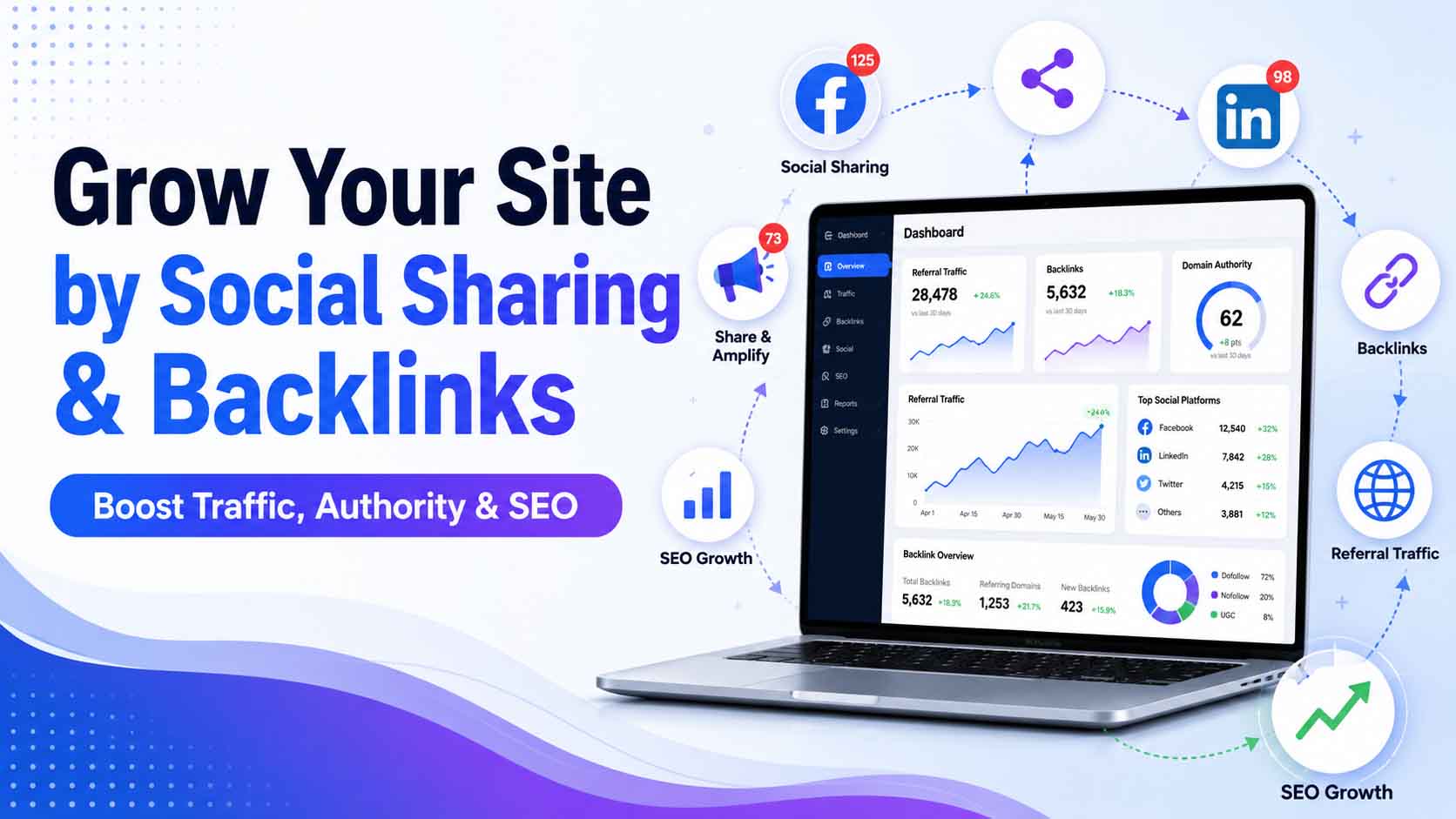
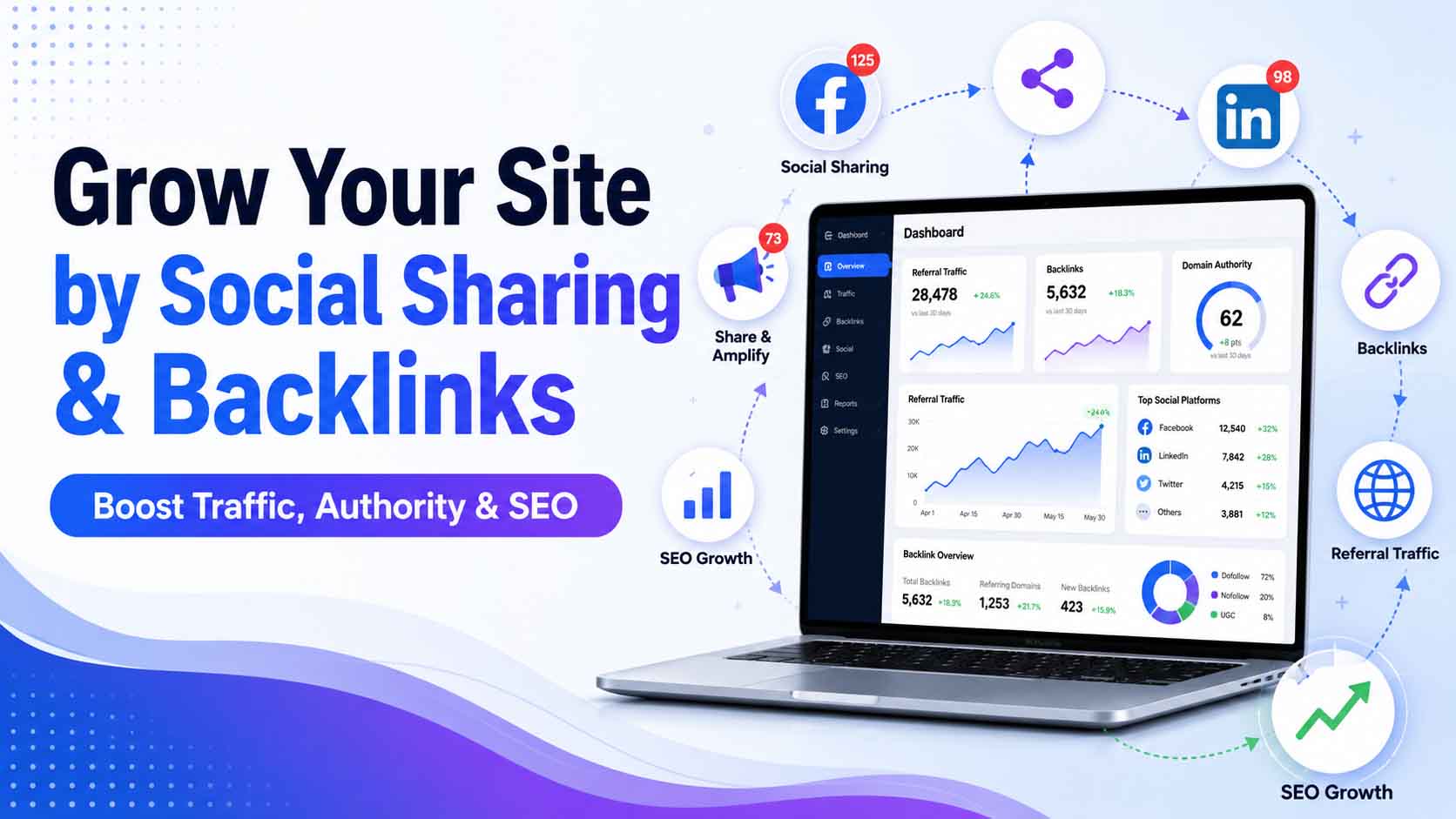
Social sharing helps your content reach real people on platforms like Facebook, X, LinkedIn, Pinterest, WhatsApp, Instagram, TikTok, and other online communities. Backlinks help your website gain authority when other websites link to your pages. Together, these two methods can improve visibility, bring referral traffic, build brand awareness, and support long-term SEO growth.
Many beginners focus only on writing articles or creating pages. While content is very important, content alone is not always enough. If nobody sees your content, it cannot perform well. Social sharing and backlinks help your content move outside your website and reach a wider audience.
In this guide, you will learn how social sharing and backlinks work, why they matter, and how you can use them to grow your website in a smart and natural way.
Grow Your Site by Social Sharing and Backlinks
What Is Social Sharing?
Social sharing means sharing your website content on social media platforms, messaging apps, groups, forums, and online communities. When someone shares your blog post, tool page, product page, video, or guide, more people get a chance to visit your website.
For example, if you publish a blog post about SEO tools and share it on Facebook, LinkedIn, or WhatsApp groups, people interested in SEO may click your link. Some may read it, some may bookmark it, and some may share it again. This creates a chain of visibility.
Social sharing is not only about traffic. It also helps build trust. When people see your website mentioned often, they become more familiar with your brand. Over time, this can make your site look more active and useful.
What Are Backlinks?
A backlink is a link from another website to your website. For example, if a blogger writes an article and adds a link to your website as a helpful resource, that link is called a backlink.
Backlinks are important because they act like recommendations. When trusted websites link to your content, search engines may see your website as more valuable and reliable. This can help improve your search visibility over time.
However, not all backlinks are equal. A backlink from a trusted, relevant website is much more valuable than a random link from a low-quality or spammy site. Quality matters more than quantity.
Why Social Sharing Matters for Website Growth
Social sharing helps your website get attention quickly. SEO can take time, but social media can bring visitors soon after publishing. If you share your content in the right places, you can attract people who are already interested in your topic.
For example, if your website is about online tools, you can share your content in groups related to blogging, SEO, YouTube, freelancing, website development, and digital marketing. People in these communities may find your tools useful and visit your site.
Social sharing also helps you understand what your audience likes. If a post gets more clicks, comments, or shares, it shows that people are interested in that topic. You can use this information to create more content around similar ideas.
Why Backlinks Matter for SEO
Search engines want to show useful and trustworthy pages to users. Backlinks can help search engines understand which websites are trusted by others. If many relevant websites link to your content, it can become a positive signal.
For example, if your blog post about “Beginner Guide to SEO Tools” gets linked by other blogs, digital marketing websites, or educational resources, it may gain more authority. This can help the page perform better in search results.
Backlinks can also bring direct referral traffic. When someone reads another website and clicks a link to your site, they become a visitor. This traffic can be valuable because it usually comes from people already interested in your topic.
Social Sharing and Backlinks Work Together
Social sharing and backlinks are different, but they support each other. Social sharing can help more people discover your content. When more people see your content, there is a higher chance that bloggers, website owners, journalists, or creators will link to it.
For example, you publish a helpful article on Apniweb.xyz about time-saving online tools. You share it on LinkedIn and Facebook groups. A blogger sees your post, finds it useful, and links to it in their own article. That social share helped create a backlink opportunity.
This is why promotion matters. Great content should not stay hidden. You need to put it in front of the right audience.
Create Share-Worthy Content First
Before focusing on social sharing or backlinks, you need content worth sharing. People usually share content that is useful, clear, practical, interesting, or emotionally valuable.
Good share-worthy content can include:
- Beginner guides
- Step-by-step tutorials
- Tool lists
- Case studies
- Checklists
- Infographics
- Free resources
- Helpful templates
- Problem-solving articles
- Original research or examples
If your content solves a real problem, people are more likely to share it. For example, a guide titled “How Online Tools Save Time for Creators and Website Owners” can attract creators, bloggers, freelancers, and website owners because it directly speaks to their needs.
Optimize Your Pages for Social Sharing
A page should look good when shared on social media. If your link preview looks unattractive, fewer people may click it. A good social preview includes a clear title, strong description, and eye-catching thumbnail image.
This is where Open Graph tags are useful. They control how your page appears on social platforms. If you run a website like Apniweb.xyz, make sure each blog post and tool page has:
- A strong meta title
- A clear meta description
- A featured image
- Open Graph title
- Open Graph description
- Open Graph image
- Twitter card support
When your content looks professional in social previews, people are more likely to click and share it.
Use Strong Titles for Social Media
Your title is one of the first things people notice. A weak title can be ignored even if the content is good. A strong title should be clear, useful, and specific.
For example, instead of writing:
“SEO Tools”
A better title would be:
“Beginner Guide to SEO Tools for Better Website Pages”
This title tells readers exactly what they will learn. It also includes useful keywords. Titles like this perform better because they match user intent.
For social sharing, keep titles simple and benefit-focused. People scroll quickly, so your title should communicate value immediately.
Add Share Buttons to Your Website
Share buttons make it easier for visitors to share your content. If someone likes your article, they should be able to share it in one or two clicks.
You can add share buttons for platforms like:
- X
- Telegram
For a tools website, share buttons can be added to blog posts, tool pages, and guide pages. If users find a tool useful, they may share it with friends or groups.
However, do not overload your page with too many buttons. Keep the design clean and user-friendly.
Share Content in the Right Places
Random sharing does not always bring good results. You should share your content where your target audience spends time.
If your website is about SEO tools, YouTube tools, blogging tools, and online utilities, useful places may include:
- SEO Facebook groups
- Blogging communities
- YouTube creator groups
- Freelancing groups
- Digital marketing forums
- LinkedIn posts
- Pinterest boards
- Reddit communities
- Quora answers
- WhatsApp and Telegram groups
Always follow community rules. Do not spam links. Instead, provide helpful answers and share your link only when it genuinely adds value.
Build Backlinks Naturally
Backlinks should be earned through quality and relevance. Avoid buying spammy backlinks or using low-quality link schemes. These shortcuts may harm your site instead of helping it.
Natural backlink building includes creating helpful content and promoting it to people who may find it useful. If your content is valuable, others may link to it over time.
Some natural backlink methods include:
- Guest posting on relevant blogs
- Creating useful guides
- Publishing statistics or original insights
- Offering free tools
- Sharing expert tips
- Creating infographics
- Answering questions on forums
- Reaching out to bloggers
- Listing your site in relevant directories
For example, if Apniweb.xyz offers helpful free tools like Meta Tag Generator, Sitemap XML Generator, Robots.txt Generator, YouTube Thumbnail Downloader, and Keyword Density Checker, other bloggers may link to these tools as resources.
Use Tool Pages as Linkable Assets
Tool pages are great for backlinks because people love linking to useful resources. A free tool can attract links more naturally than a normal article.
For example, these types of pages can become linkable assets:
- Free Meta Tag Generator
- Free Sitemap XML Generator
- Free Robots.txt Generator
- Free Word Counter
- Free Hashtag Generator
- Free YouTube Thumbnail Downloader
- Free QR Code Generator
If a blogger writes about SEO and wants to recommend a tool, they may link to your tool page. This is why online tools can be powerful for website growth.
To make tool pages more link-worthy, add helpful explanations, FAQs, examples, and instructions. A tool page with useful content is better than a tool page with only a form.
Write Guest Posts for Relevant Websites
Guest posting is one of the classic ways to build backlinks. It means writing an article for another website and including a link back to your site where relevant.
For example, if you own a tools website, you can write guest posts on topics like:
- Best SEO tools for beginners
- How bloggers can optimize content faster
- YouTube SEO tips for new creators
- How online tools improve productivity
- Website optimization checklist
The key is to provide real value. Do not write guest posts only for links. Write content that helps the audience. A natural link inside a helpful article is much better than a forced link.
Turn Blog Posts into Social Content
One blog post can be reused in many ways for social sharing. This saves time and increases reach.
For example, from one blog post, you can create:
- A Facebook post
- A LinkedIn article summary
- A Pinterest pin
- A short Twitter/X thread
- An Instagram carousel
- A YouTube community post
- A WhatsApp group message
- A short video script
This is called content repurposing. It helps you get more value from every article you publish.
If you publish a blog post on Apniweb.xyz, you can create multiple short social posts from it and share them across platforms. This brings more traffic and increases the chance of backlinks.
Use Internal Linking Alongside Backlinks
Backlinks bring authority from other websites, while internal links help distribute that authority inside your own website. Internal linking means linking from one page of your website to another page.
For example, in a blog post about social sharing, you can link to your tools like:
- Hashtag Generator
- Open Graph Checker
- Meta Tag Generator
- QR Code Generator
- YouTube SEO Booster
Internal links help visitors discover more pages. They also help search engines understand your site structure.
A website with strong internal linking can perform better because important pages are easier to find.
Monitor Your Results
To grow your website, you should track what works. Check which social platforms bring traffic. See which pages get backlinks. Monitor which posts get the most clicks.
Useful things to track include:
- Website traffic
- Referral traffic
- Social traffic
- Backlinks
- Top pages
- Search impressions
- Click-through rate
- User engagement
When you understand your results, you can improve your strategy. If LinkedIn brings more visitors than Facebook, focus more on LinkedIn. If tool pages attract more backlinks than normal posts, create more useful tools and guides.
Avoid Spammy Promotion
Promotion is important, but spam can damage your reputation. Do not post your link everywhere without context. Do not comment on random blogs only to drop your link. Do not buy hundreds of low-quality backlinks.
Good promotion is helpful, honest, and relevant. Share your content where it makes sense. Explain why it is useful. Join conversations. Build relationships.
Website growth is not only about links and traffic. It is also about trust.
Be Consistent
Social sharing and backlink building take time. One post may not change everything. You need to publish useful content regularly, share it with the right audience, and keep improving your website.
Consistency builds momentum. The more helpful content and tools you create, the more chances you have to attract visitors, shares, and backlinks.
For a website like Apniweb.xyz, a strong strategy can include publishing helpful blog posts, creating free tools, optimizing each page, sharing content on social platforms, and reaching out to relevant websites.
Final Thoughts
Social sharing and backlinks are two powerful ways to grow your website. Social sharing helps your content reach people faster, while backlinks help build authority and trust over time. When used together, they can increase traffic, improve visibility, and support long-term SEO growth.
The most important thing is to create content and tools that people actually find useful. If your pages solve real problems, users are more likely to share them, and other websites are more likely to link to them.
For website owners, bloggers, creators, and marketers, this strategy can make a big difference. Share your content smartly, build backlinks naturally, optimize your pages properly, and stay consistent.
A website does not grow by accident. It grows through helpful content, smart promotion, strong relationships, and useful resources. With the right approach, social sharing and backlinks can help your site reach more people and build a stronger online presence.