When people talk about SEO, they often think about keywords, backlinks, content length, website speed, and technical optimization. These things are important, but many beginners forget two small elements that can make a big difference: meta titles and meta descriptions.
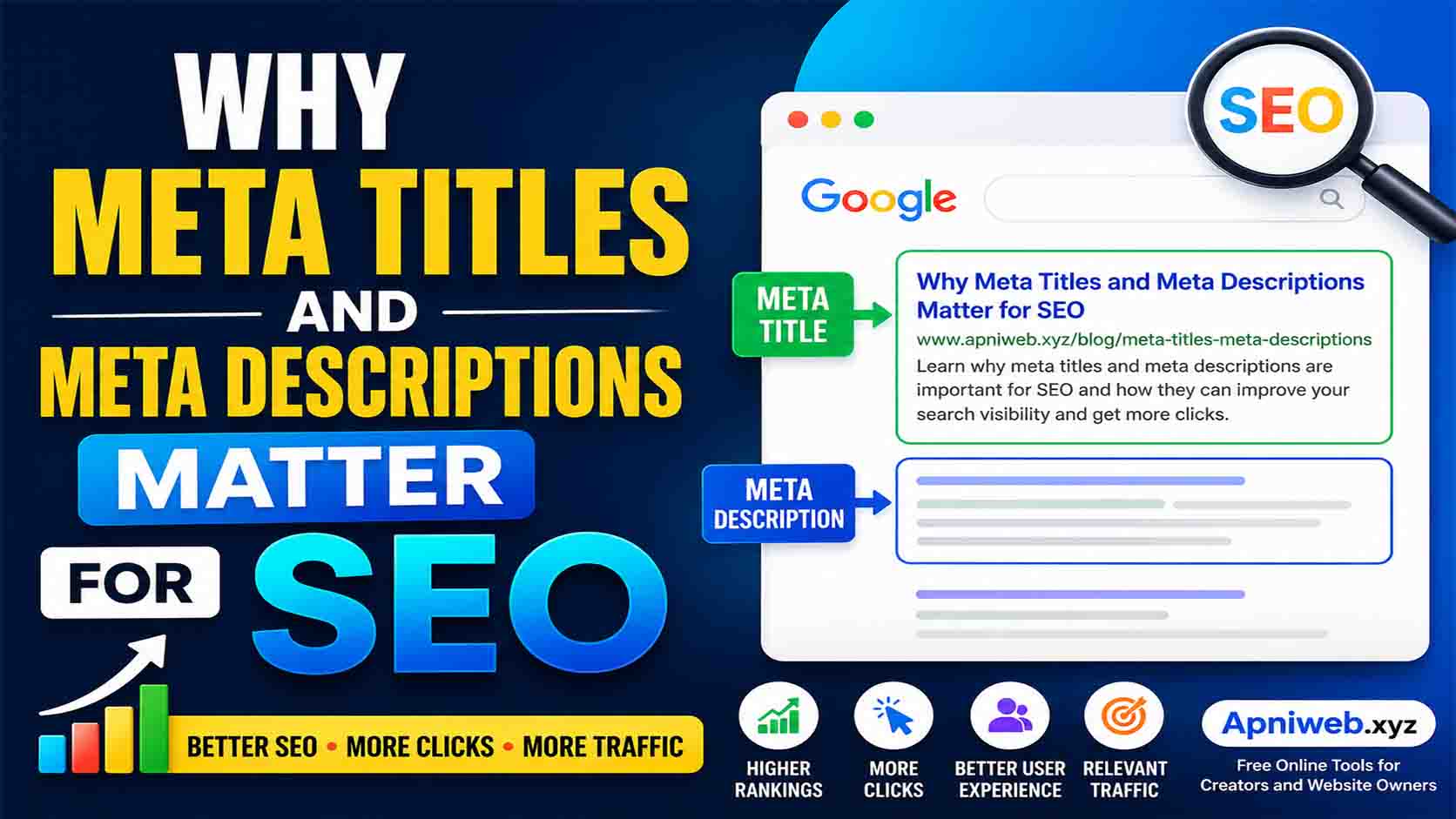
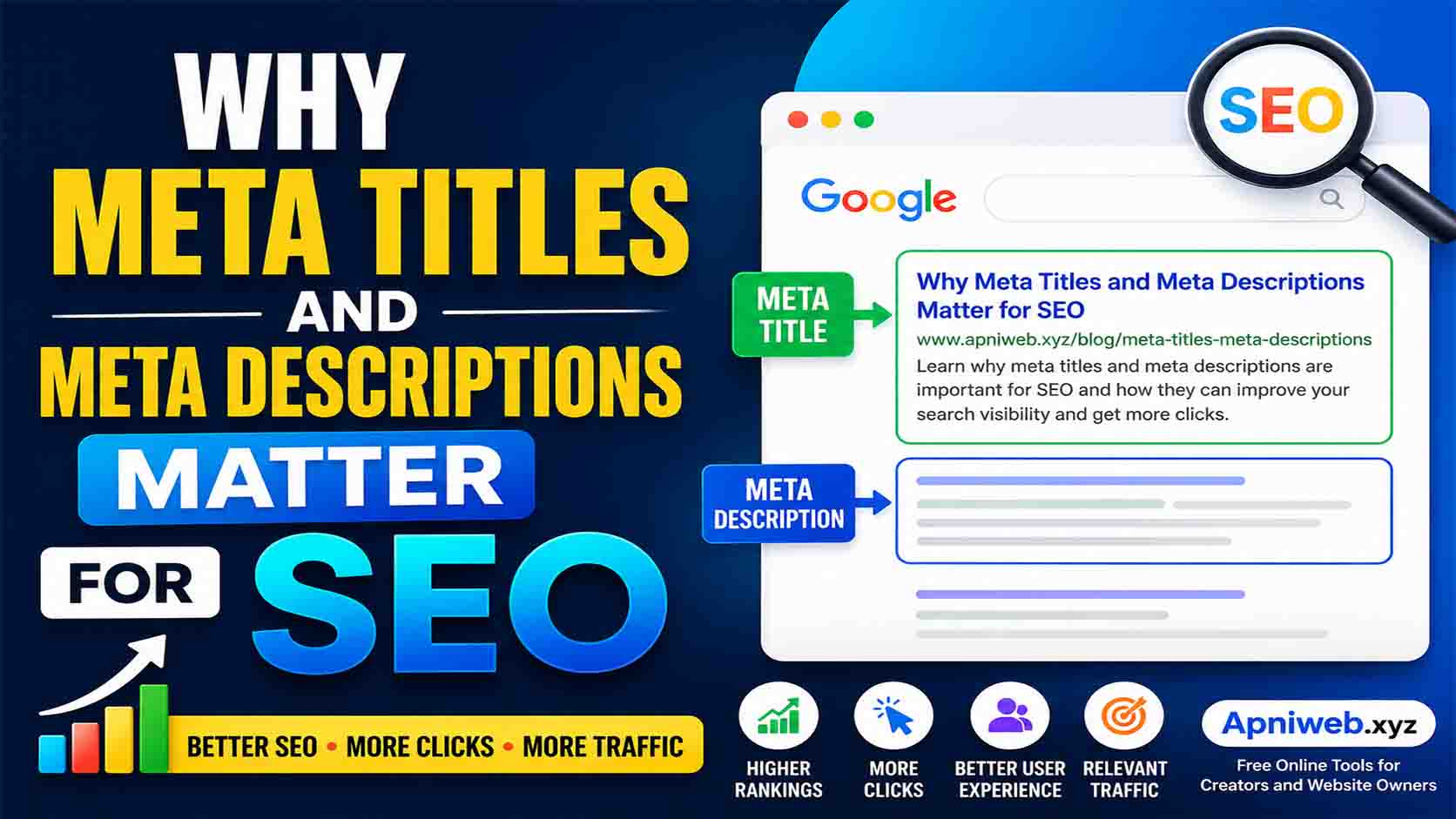
A meta title is the title of a page that usually appears in search engine results. A meta description is the short summary shown below that title. Together, they create the first impression of your website page before a visitor even clicks. If your meta title and description are clear, useful, and attractive, more people may choose your page from search results. If they are missing, weak, too long, or confusing, users may ignore your page even if your content is good.
Meta titles and meta descriptions matter because SEO is not only about ranking. It is also about getting real people to click, read, and take action. A page can appear in search results, but if the title and description do not look helpful, users may choose another result. That is why every website owner, blogger, creator, and digital marketer should understand how to write better meta titles and descriptions.
Why Meta Titles and Meta Descriptions Matter for SEO
What Is a Meta Title?
A meta title, also called a title tag, is the main title that tells search engines and users what your page is about. It is often displayed as the clickable headline in search results. It also appears in browser tabs and sometimes when your page is shared on different platforms.
For example, if you write a blog post about SEO tools, a simple meta title could be:
Beginner Guide to SEO Tools for Better Website Pages
This title clearly explains the topic. It tells the reader that the article is for beginners and focuses on SEO tools for improving website pages.
A good meta title should be specific, readable, and connected to the content of the page. It should include the main keyword naturally, but it should not look spammy. Search engines and users both prefer titles that feel helpful and honest.
What Is a Meta Description?
A meta description is a short summary of a web page. It appears below the title in search results and gives users a quick idea of what they will find on the page.
For example:
Learn why meta titles and meta descriptions matter for SEO, how they improve click-through rate, and how to write better search snippets for your website pages.
This description explains the benefit of reading the page. It includes important phrases like meta titles, meta descriptions, SEO, click-through rate, and website pages, but it still sounds natural.
Meta descriptions do not guarantee higher rankings by themselves, but they can strongly influence whether users click your page. A better description can increase your click-through rate, which means more people visit your website from search results.
Why Meta Titles Matter for SEO
Meta titles are important because they help search engines understand the main topic of your page. When search engines crawl your website, the title tag is one of the signals they use to understand what the page is about.
A strong meta title can improve page relevance. If your page is about “free SEO tools for bloggers,” your title should clearly reflect that topic. If the title is vague, search engines and users may not understand the purpose of the page.
Meta titles also matter because they appear prominently in search results. Users often scan titles quickly before deciding which result to click. If your title matches what they are searching for, they are more likely to choose your page.
For example, a weak title might be:
SEO Tips
A stronger title would be:
10 SEO Tips to Improve Website Pages for Beginners
The second title is more specific, more useful, and more clickable. It tells the reader what they will get and who the content is for.
Why Meta Descriptions Matter for SEO
Meta descriptions matter because they support the title and encourage users to click. A title gets attention, but the description gives more detail. It helps users decide whether your page is worth visiting.
Think of the meta description like a mini advertisement for your page. It should not be misleading, but it should explain the value of the content. If your description is clear and attractive, users may choose your page over competitors.
A good meta description can also help your page look more professional in search results. If you do not write one, search engines may automatically pull random text from your page. Sometimes that automatic text may not represent your page properly. It may look incomplete, confusing, or less attractive.
Writing your own meta description gives you more control over how your page appears.
Meta Titles and Click-Through Rate
Click-through rate, often called CTR, means the percentage of people who see your page in search results and then click on it. For example, if 1,000 people see your page and 100 people click, your CTR is 10%.
Meta titles have a direct impact on CTR because they are the first thing users notice. If your title is boring or unclear, people may skip it. If your title is clear, useful, and relevant, more people may click.
A good title should answer the user’s search intent. Search intent means the reason behind a search. If someone searches “how to write meta description,” they want a guide, not a general article about SEO history. Your title should match what the user wants.
For example:
How to Write Meta Descriptions That Get More Clicks
This title is stronger because it promises a specific benefit.
Meta Descriptions and User Trust
Meta descriptions help build trust before users visit your website. A clear description shows that your page is organized and relevant. It tells users that your content can answer their question.
If a description is full of repeated keywords, it may look spammy. If it is too vague, users may not understand the benefit. If it is too long, part of it may be cut off in search results.
A trustworthy meta description should be written for humans first. It should sound natural and helpful. It should explain what users will learn or gain from the page.
For example, instead of writing:
Meta title, meta description, meta title SEO, meta description SEO, SEO title, SEO description, SEO tips
A better description would be:
Discover how meta titles and meta descriptions help improve search visibility, attract more clicks, and make your website pages look professional in search results.
The second version is much better because it communicates value naturally.
Best Length for Meta Titles
There is no perfect title length that works every time, but a good meta title should usually be short enough to display properly in search results. Many SEO experts recommend keeping titles around 50 to 60 characters, but the actual display depends on pixel width and device type.
The goal is not only character count. The goal is clarity. Your main keyword and important words should appear near the beginning of the title when possible.
For example:
Meta Titles and Descriptions: Complete SEO Guide
This title is short and clear.
A title like this may be too long:
The Complete Beginner Friendly Guide to Understanding Why Meta Titles and Meta Descriptions Are Very Important for Search Engine Optimization
It contains useful words, but it is too long and may be cut off. A shorter version is better.
Best Length for Meta Descriptions
Meta descriptions are usually best when they are clear and concise. Many people keep them around 140 to 160 characters, although search engines may show different lengths depending on the search query and device.
A good description should include the main idea, a benefit, and a natural keyword phrase. Avoid writing descriptions that are too short, too long, or too generic.
Weak description:
This post is about meta titles and descriptions.
Better description:
Learn why meta titles and meta descriptions matter for SEO and how better search snippets can improve clicks, traffic, and page performance.
The better version gives more value and includes relevant SEO terms naturally.
How to Write a Good Meta Title
Writing a good meta title is not difficult if you follow a simple approach. First, identify the main topic of the page. Then think about what the user is searching for. After that, create a title that clearly connects the topic with the user’s need.
A good meta title should:
- Include the main keyword naturally
- Clearly describe the page
- Be attractive but not misleading
- Stay focused on one topic
- Be unique for every page
- Avoid unnecessary repeated words
For example, if your page is about a meta tag generator tool, a good title could be:
Free Meta Tag Generator for Better SEO Snippets
This title includes the tool name, the benefit, and the SEO purpose.
How to Write a Good Meta Description
A good meta description should answer one simple question: Why should someone click this page?
Start by explaining what the page offers. Then mention a benefit. Keep the tone natural and helpful.
For example:
Use our free Meta Tag Generator to create SEO-friendly meta titles, descriptions, and keywords for better website page optimization.
This description is useful because it tells the user what the tool does and why it matters.
Avoid descriptions that are only stuffed with keywords. Also avoid clickbait promises that your page cannot deliver. If users click and leave quickly because the page does not match the description, that can hurt user experience.
Common Meta Title Mistakes
Many website owners make simple mistakes with meta titles. One common mistake is using the same title on multiple pages. Every page should have a unique title because every page has a different purpose.
Another mistake is writing titles that are too generic. A title like “Home” or “Blog” does not tell users or search engines enough. A better homepage title might include your brand and main service.
Some people also repeat keywords too much. For example:
SEO Tools, Free SEO Tools, Best SEO Tools, SEO Tools Online
This looks unnatural. A better title would be:
Free SEO Tools to Improve Website Pages
Simple and natural titles work better.
Common Meta Description Mistakes
A common mistake is leaving the meta description blank. When this happens, search engines may choose random text from the page. This can sometimes look messy in search results.
Another mistake is writing descriptions that are too long. If the description is cut off, users may not see the full message.
Some website owners write descriptions that do not match the page content. This can disappoint visitors. Your description should accurately represent the page.
Keyword stuffing is also a major mistake. A description should include keywords naturally, but it should not read like a keyword list.
Why Every Page Needs Unique SEO Metadata
Every important page on your website should have its own meta title and description. Your homepage, tool pages, blog posts, category pages, contact page, and service pages should not all use the same metadata.
Unique metadata helps search engines understand each page separately. It also helps users choose the right result from search pages.
For example, a website like Apniweb.xyz may have different tools and blog posts. A YouTube Thumbnail Downloader page should have a different title and description from a Meta Tag Generator page. A blog post about SEO tools should have different metadata from a blog post about backlinks.
This makes your site more organized and professional.
How Meta Tags Help Online Tools Websites
For online tools websites, meta titles and descriptions are especially important. Tool pages often target specific search queries, such as:
free word counter online
meta tag generator
robots.txt generator
YouTube thumbnail downloader
keyword density checker
If each tool page has a strong meta title and description, it has a better chance of attracting users from search engines. The title should clearly mention the tool, and the description should explain what users can do with it.
For example:
Free Word Counter Online – Count Words and Characters Fast
Description:
Use this free online word counter to quickly count words, characters, sentences, and paragraphs for blogs, essays, captions, and website content.
This is clear, useful, and focused.
Using Apniweb.xyz Tools for Better SEO
Apniweb.xyz provides helpful online tools that can support creators, bloggers, and website owners in their SEO workflow. Tools like Meta Tag Generator, Keyword Density Checker, Word Counter, Sitemap XML Generator, Robots.txt Generator, and Open Graph Checker can help improve website pages before publishing.
The Meta Tag Generator can help users create meta titles, meta descriptions, and keywords more easily. The Keyword Density Checker can help maintain natural keyword usage. The Word Counter can help check content length. The Open Graph Checker can help ensure a page looks good when shared on social platforms.
By using these tools together, website owners can create cleaner, more optimized pages without wasting too much time.
Final Thoughts
Meta titles and meta descriptions may look small, but they play an important role in SEO and user experience. They help search engines understand your pages and help users decide whether to click your result.
A good meta title should be clear, focused, and keyword-friendly. A good meta description should explain the value of the page and encourage clicks naturally. Both should be unique for every important page on your website.
If you want better website pages, do not ignore metadata. It is one of the simplest ways to make your pages look more professional in search results. Whether you run a blog, business website, tools website, or creator platform, better meta titles and descriptions can help improve visibility, clicks, and overall performance.